Mid Atlantic Auto Care Alliance
Sign In Join MAACA

Navigation

  • About
    • About Us
    • Code of Ethics
  • Benefits
    • Membership Benefits
    • Allied Members
    • SOS Groups
  • Super Saturday
  • TOOLS
  • Events
    • MAACA Events
  • News
  • Shop Finder
  • Contact

Back to Event
Register

(technical) Electrical Diagnostics using Kirchhoff’s Voltage Law with Tony Martin

Thursday PM Session

Speakers
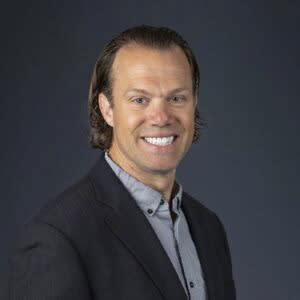
  • Tony Martin - Delphi
    Tony Martin has been working in the automotive and diesel technology fields since 1984. He started his career in Canada as an apprentice mechanic at an International Harvester dealer and graduated as an Interprovincial Journeyman Heavy Duty Equipment Mechanic in 1989. Since that time, he has operated his own mobile repair business, worked in Alaska’s Cook Inlet oilfield as a gas turbine technician, and taught automotive and diesel technology at the post-secondary level for 17 years. After leaving the University of Alaska in 2013, he worked as a mobile equipment maintenance trainer at a corporate gold mine in Fairbanks, Alaska. His last full-time day in the mining industry was August 1, 2022, and he now is a freelance writer and trainer. Tony has written dozens of articles over the years for Motor Age magazine and the Mobile Air Climate Systems Association (MACS). He has also presented seminars at many conferences, including NACAT, MACS, TST, Automechanika and the ASE Instructor Training conference. Tony holds 22 ASE certifications, including CMAT (A1-A9), CMTT (T1-T8), F1, H1, L1, L2 and L3.
Summary
When an electrical component is performing poorly, it is likely that it isn’t receiving enough voltage to do its job. Where did the missing voltage go? Join Tony Martin as he explains how Gustav Kirchhoff’s voltage law helps us diagnose these failures. Whether you are new to the field or an experienced pro, don’t miss this opportunity to sharpen your electrical troubleshooting skills! The learner will: -describe voltage, current and resistance and how these quantities relate to electrical diagnostics -demonstrate an understanding of Kirchoff’s voltage law -describe how to determine if excessive voltage drop is affecting circuit performance -demonstrate how to use a digital multimeter (DMM) to measure voltage drops in an electrical circuit -explain how to determine the difference between normal and excessive voltage drop

(technical) Variable Valvetrain Technology with Jerry Mungle

Thursday PM Session

Speakers
  • Jerry Mungle - ACDelco
Summary
This training event focuses on the operation and diagnostic procedures of Variable Valvetrain Technology. Modern engines employ variable valve timing and lift adjustment strategies to improve fuel economy, power, and emissions. Course content includes function and operation of variable valve timing and variable valve lift systems. Additionally, this course highlights the procedures and protocol for proper diagnostic steps, system repairs, service tips, and special tools. Various Original Equipment Manufacturers (OEMs) will be highlighted.

(management) The High-Performance Service Advisor with Michelle Wood

Thursday PM Session

Speakers
  • Michelle Wood - ATI
    Michelle Wood is a Sales and Service Manager Instructor for the Automotive Training Institute (ATI), backed by 30 years of comprehensive operations and sales experience across the automotive and transportation sectors. A master of backend shop logistics and frontend profitability, Michelle’s deep technical administrative background includes steering complex warranty audits, corporate payroll, and aftermarket warranty administration. She has held foundational senior roles—including General Manager, Service Director, and Sales Manager—where she directed multi-location operations and family-owned independent shops. Known for translating complex operational friction into highly efficient systems, Michelle specializes in service advisor training, labor optimization, and ethical sales practices. At ATI, she leverages her three decades of hands-on expertise to scale business P&Ls, build operational accountability, and elevate shop leaders nationwide.
Summary
Building Trust, Creating Value, and Increasing Sales Without Pressure Your service advisor has a direct impact on customer satisfaction, retention, average repair order, and overall profitability. This workshop teaches advisors and managers how to build trust quickly, improve communication, confidently present recommendations, and create exceptional customer experiences that naturally increase sales. Participants will learn how to: -Build trust during every customer interaction -Conduct effective vehicle walk-arounds -Write repair orders that improve technician efficiency -Identify customer buying motivations -Present recommendations with confidence -Increase average repair order ethically Interactive Activities: -Customer personality exercises -Active listening workshop -Estimate presentation practice Ideal Audience: -Service Advisors -Service Managers -Shop Owners -Future Advisors

(technical) ADAS: Successful Calibrations & Troubleshooting with Liz Perkins

Thursday PM Session

Speakers
  • Liz Perkins - L1 Automotive Training
    Liz has been in the industry for over 6 years, serving in various capacities, including mobile programming, automotive key specialist, ADAS specialist and instructor. Currently, Liz Co-Owns and operates the L1 Automotive Group with her husband. The L1 Automotive Group comprises of the following 3 companies: L1 Automotive Diagnostics and Programming – A mobile company that only services other repair shops and collision centers in the Tulsa Oklahoma market, and the Oklahoma City market providing Diagnostics, ADAS, Module Programming, 1234yf and immobilizer solutions. Level 1 Automotive – A traditional brick and mortar repair shop that services the public providing complete vehicle repair and maintenance services in Tulsa Oklahoma. L1 Automotive Training – An automotive training company providing online content, in person training at large events and expos all over the world, content development and production for some of the biggest names in automotive training and multiple government contracts for content production, development and delivery. Liz currently serves as a Subject Matter Expert for the ASE L4 test. Liz’s favorite activity outside of work is taking care of her 40+ farm animals and spending time with her friends and family!
Summary
We will cover troubleshooting and common pitfalls for the advanced ADAS technician, advisor and newcomers alike. This class is designed to assist technicians that are new to ADAS in creating successful processes and procedures to properly calibrate the most popular static and dynamic ADAS systems. We will briefly cover ADAS sensors and their operation to build a fundamental knowledge of ADAS systems.

(technical) Vehicle Network Diagnosis with Gary Machiros

Thursday PM Session

Speakers
  • Gary Machiros - WTI
Summary
- Identifying network failure type - Recognize network type - Determine network protocol - Wiring schematic research - Service information research - Scan tool testing -Lab scope testing - Multimeter testing - Signal generator testing

(management) Why Your Technicians Only Produce 3-5 Hours a Day (And How to Get Them to 10-12) with Rick White

Thursday PM Session

Speakers
  • Rick White - 180Biz
Summary
You pay your technicians for 8 to 10 hours a day. Your billed hours say you’re getting 3 to 5. The national average is about 5.2, and most owners have quietly accepted that as normal. It isn’t. A well-run shop averages 10 to 12 billed hours per technician per day — and no, that isn’t a typo. A technician working eight hours can bill more than eight, because a job with a flat-rate time of 1.5 hours completed in 60 minutes bills 1.5. That’s efficiency, and it’s available to any shop whose systems aren’t fighting the technician. Here’s the part most owners don’t want to hear: 80 to 85 percent of low production traces back to operational bottlenecks, not technician effort. Broken systems, missing systems, inconsistent systems. Which means the pushing, the motivational speeches, and the incentive programs were never going to work — and your technicians are usually as frustrated as you are. This session starts by making the loss real. You’ll calculate your own annual profit leak in actual dollars, then map one real technician’s day in fifteen-minute blocks and mark every one green, yellow, or red. Owners are routinely shocked by that exercise, not because anything new is happening, but because they can finally see it. From there you’ll score your shop against ten production limiter categories — workflow, parts, front-to-back communication, estimating, inspections, tooling, technical information, scheduling, technician-specific delays, and billing practices — and find the one constraint costing you the most billed hours. You’ll learn Recognize, Identify, Remove: a repeatable process for separating a shop problem from a people problem, getting your team’s help without handing over the decision, and taking out one bottleneck at a time. You’ll also get the 15 percent — how to tell when the technician genuinely is the constraint, and what to do about mindset, skillset, and toolset when they are. You’ll leave with a removal plan for your single biggest constraint and a 30-day sprint to execute it. WHAT YOU WILL LEARN • Distinguish available hours, actual hours, and billed hours — and see exactly where the gap lives • Calculate what low production is costing your shop every year in real dollars • Map a technician’s day and identify every non-billable block and its cause • Score your shop across the ten production limiter categories • Track the four numbers that matter: productivity, efficiency, proficiency, and effective labor rate • Apply Recognize, Identify, Remove to find and eliminate your core constraint • Involve your team in diagnosis without giving up the decision • Tell the difference between a system problem and a technician problem, and handle each correctly • Build a 30-day sprint that moves one constraint permanently

(technical) Advanced Alignment Diagnostics with William McAleese

Thursday PM Session

Speakers
  • William McAleese - Garage Guru
Summary
This seminar enhances the skills of the professional undercar technician in the area of advanced wheel alignment. It covers suspension and steering diagnosis due to bent parts from accidents and road hazards, vehicle modifications, tire/wheel resizing and height issues. A review of basic alignment angles followed by thorough explanation of steering axis inclination (SAI), included angle (IA), scrub radius and toe out on turns (TOOT) will assist the alignment technician in utilizing the aligner as a diagnostic tool. Related electronic systems are also covered in this course. Vehicle component inspection and customer communication skills are necessary traits for any successful alignment tech and the importance of these skills are stressed in this class. After completing this clinic, the student will have the knowledge to: Utilize the alignment machine as a diagnostic tool for the alignment and repair of vehicles involved in road hazard incidents and vehicle collisions Identify root causes for uneven or erratic tire wear and handling problems. Effectively communicate the results to the vehicle owner. Validate performance of steering and suspension components on ECS equipped vehicles Identify how vehicle modifications and tire/wheel changes affect alignment and dynamic operation Analyze related electronic systems that interact with the chassis system in need of recalibration or adjustment after the alignment procedure

(management) Get a Grip on Tire Sales with Jonathon Tangye

Thursday Evening Fundamentals Training

Speakers
  • Jonathon Tangye - Epoch Automotive
    Jonathon Tangye is the owner of Epoch Automotive in Doylestown, Pennsylvania, and has more than 25 years of experience in the automotive industry. Throughout his career, he has worked as a technician, service advisor, manager, and shop owner, giving him a unique perspective on every aspect of automotive repair. Jon is passionate about helping shops improve communication, build trust with clients, and increase profitability through education rather than sales tactics. As Mechanical Director for MAACA, he is committed to elevating the automotive industry through training, mentorship, and practical strategies that advisors and technicians can put to work immediately.
Summary
This isn't your typical tire class. Discover why tires are much more than just black, round, and made of rubber as you learn how to confidently explain tire technology, construction, repairs, maintenance, and how to match the right tire to the right client. This class is designed to help service advisors become trusted tire experts who educate instead of sell, building stronger client relationships and helping customers make confident decisions. You'll also learn why focusing on gross profit dollars instead of gross profit percentages creates a win for your clients, your shop...and yes, probably your boss too!

(management) Where Did the Cash Go? : Why Profitable Shops Still Run Out of Cash with Kris Rymer

Thursday Evening Fundamentals Training

Speakers
  • Kristopher Rymer - Rymer CPA
Summary
Your income statement says the shop made money, but your bank account tells a different story. Sound familiar? Many successful repair shops struggle with cash flow despite being profitable. This practical session explains why profit and cash are not the same and how business decisions involving equipment, staffing, inventory, taxes, debt, and owner distributions all affect the amount of cash available to reinvest in the business. Using real-world examples from an active independent repair shop, attendees will learn how to improve cash flow, reduce financial stress, and make confident investment decisions that support long-term growth. What You'll Learn Why profitable shops can still experience cash shortages The difference between profit, cash flow, and owner income How taxes, debt, equipment purchases, and inventory impact available cash How to plan for major investments without creating unnecessary financial strain Common cash flow mistakes that limit growth Practical strategies to build healthier cash reserves and greater financial confidence

(technical) Active and Dynamic Fuel Management with Jerry Mungle

Friday AM Session

Speakers
  • Jerry Mungle - ACDelco
Summary
This training event covers Fuel Management systems installed on various vehicles. Active and Dynamic systems will be covered in detail. Seminar content includes function and operation of cylinder deactivation systems. Additional topics include protocol for proper vehicle repairs, diagnostic strategies, service tips, and special tools. Various Original Equipment Manufacturers (OEMs) will be highlighted.

(technical) Improving Your Road Test Diagnostics Using Fuel Trim with Jim Wilson

Friday AM Session

Speakers
  • James Wilson
Summary
Are you making the best use of your road tests for diagnostics? Join us to discover a procedure that has been proven to work on no-code and code diagnostics to determine the PCM fuel control for driveability issues. This proven four-step procedure, when added to the road-test, will greatly help as your first step in the diagnostic process for engine performance. Topics covered: What is Fuel Trim Control? Four Step Road Test Procedure When to use the Enhanced Side or OBD2 side Evaluating sensors inputs Why use this as a starting point in all diagnostics How to use the similar conditions window Rear O2 Fuel Trim Freeze Frame and Drive Cycles Euro Vehicles Multiplicative and Additive Fuel Trim You are already doing road-tests, so why not make the best use of your time?

(technical) Steering and Suspension Systems

Friday AM Session

Summary
This course is designed to provide a high-level overview of automotive steering and suspension technology as it exists today and some insight into where it is going in the future. It is intended to provide advancing technicians with some knowledge of the essentials of steering and suspension design, as well as some of the diagnostic skills needed to address the future. More seasoned technicians will find it a good review along with some exciting insight into the diagnostic and repair challenges ahead for: • Variable effort power steering and electric power steering • Adaptive Suspension Systems • Air suspension and fully active suspension systems • Electronic chassis and steering system sensor diagnosis & resets (SAS, YAW, etc.) • ADAS (Automated Driver Assist Systems) effects on steering & suspension

(technical) Advanced Module Programming for the Rest of the Vehicle with Tim Iezzi and Ira Waldman

Friday AM Session

Speakers
  • Tim Iezzi - Expertech
  • Ira Waldman - Expertech
Summary
Most programming classes stop at engine controllers. The real problems often don’t. Body, chassis, and network modules are increasingly responsible for no-starts, warning messages, and vehicle shutdowns. This class focuses on advanced programming scenarios involving non-PCM modules across multiple manufacturers. You’ll work through real-world situations using OEM and aftermarket tools, including new and used module installations. By the end of this class, you’ll understand what modules can be programmed, what requires additional steps, and how to avoid turning advanced programming jobs into unpaid experiments. What You Will Learn: Non-PCM Programming Strategy: Common body and chassis modules that require programming Used Module Reality: What works, what doesn’t, and how to verify compatibility Tool Selection: Choosing the right platform for the job without unnecessary risk Boundary Awareness: Knowing when to proceed—and when to stop

(technical) Hands On Scope Class with Scott Shotton Part 1 (Please note, this is an 8hr hands-on class)

Friday AM Session

Speakers
  • Scott Shotton - WTI
Summary
This is the first part of the Scope class. You must attend the afternoon session. - Using Wiring Diagrams & Testing Processes - Scope Set-Up, Tips & Tricks - Time-Saving Tests - Practice with Your Scope on Live Cars - Save Diagnostic Time & Be More Efficient with Your Diagnosis

(management) Leading the Back of the House: KPIs, Workflow, and Team Development with Andrew Fischer

Friday AM Session

Speakers
  • Andrew Fischer
Summary
Are you a foreman, manager, shop lead, or lead technician struggling to effectively lead your team? Do you find yourself unsure how to utilize technician KPIs, manage shop capacity, identify bottlenecks, or improve workflow? This class is designed specifically for back-of-the-house leaders who want to improve performance, strengthen communication, and build a more productive and engaged team. During this session, Andrew Fischer will address some of the most common challenges faced by shop leaders and provide practical strategies for improving technician performance, maximizing shop efficiency, and developing future leaders within your organization. Attendees will learn how to: Understand and effectively use technician KPIs Identify workflow bottlenecks and operational inefficiencies Improve shop capacity and productivity Lead with clear and consistent communication Conduct effective morning meetings- Inspire growth and accountability among team members Develop technicians into future leaders Create a culture focused on continuous improvement and success This class provides actionable tools and leadership strategies that attendees can immediately implement to improve shop operations and strengthen their back-of-the-house teams.

(mangement) The Numbers That Drive Profitable Growth with Kris Rymer

Friday AM Session

Speakers
  • Kristopher Rymer - Rymer CPA
    Kris Rymer, CPA, is the founder of Rymer CPA and the owner of Rymer Automotive Specialists, an independent repair shop in Wilkes-Barre, Pennsylvania. Unlike most accountants serving the automotive industry, Kris actively manages and grows his own repair shop while advising business owners on accounting, tax, and financial strategy. By combining more than two decades of CPA experience with the day-to-day realities of shop ownership, he helps owners make better decisions about growth, profitability, staffing, and cash flow. Under his leadership, Rymer Automotive has recently grown from approximately $830,000 in annual revenue to a current run rate exceeding $1.5 million.
Summary
Growing sales doesn't automatically create a more profitable business. Successful shop owners understand which numbers matter and use them to make better decisions about hiring, advertising, pricing, equipment, and expansion. This session combines financial insight with real-world shop management experience to demonstrate how data can reduce risk and support sustainable growth. Using actual examples from a growing independent repair shop, attendees will learn how to evaluate opportunities, avoid costly mistakes, and invest with confidence. What You'll Learn The difference between sales growth and profitable growth How to know when it's time to hire another technician or service advisor When additional lifts, equipment, or new services make financial sense How to evaluate advertising investments and measure their effectiveness Identifying capacity constraints before they become growth barriers Using financial and operational data to make better business decisions

(technical) Electro-Hydraulic Brake System with Jerry Mungle

Friday PM Session

Speakers
  • Jerry Mungle - ACDelco
Summary
This training event is intended to teach technicians how to identify the components and functions of electrohydraulic brake systems, including how to evaluate the service procedures and precautions of electro-hydraulic brake systems, and identifying common failures of electro-hydraulic brake systems.

(technical) Cracking the Code: Diagnostic Frameworks for Modern Vehicle Electronics with David Nix

Friday PM Session

Speakers
  • David Nix - ATI
    David Nix is a highly accomplished professional with a multifaceted career in the automotive industry. As the Leading Tech Training Program Instructor at ATI (Automotive Training Institute), David brings his wealth of expertise to develop and oversee ATI's comprehensive technical training programs. His commitment to advancing the industry's knowledge and skills is reflected in his various leadership roles and affiliations. With a strong background in education and curriculum development, David's experience extends beyond the automotive industry. He served as a distinguished instructor and curriculum developer in the United States Navy, where he played a vital role in shaping the training programs for future Navy personnel. This background in instructional design and pedagogy serves as a solid foundation for his contributions to the automotive training field. David’s dedication to the automotive industry is further evident in his involvement with esteemed organizations. In recognition of his expertise and commitment to education, David serves on the Automotive Advisory Boards of Lincoln Tech in Irving Texas. Through this advisory role, he provides valuable insights and guidance to ensure that educational programs align with industry needs and standards. He is an Evaluation Team Leader for ASE to ensure teaching intuitions to fill the accreditation standards set by ASE. Certified Executive Coach, Genos Evaluation Team Leader, ASE World Class Technician with over 32 ASE Certification. Throughout his career, David Nix has exhibited a relentless passion for advancing the automotive industry through education, collaboration, and leadership. With his extensive experience in curriculum development, instructional design, and training program management, he continues to elevate the standards of technical training and empower professionals to excel in their careers.
Summary
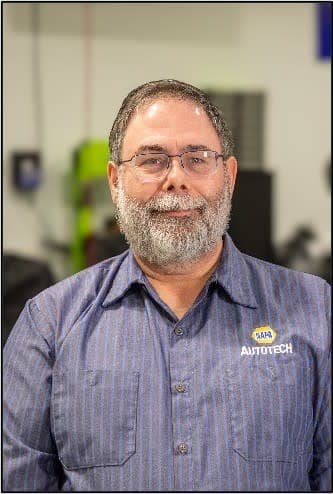
This course equips automotive technicians with a structured, diagnostic-driven framework for modern electrical and electronic systems. Beginning with core electrical principles, the curriculum advances through system operations, component identification, systematic testing, and sophisticated diagnostic strategies. Learning is reinforced through real-world case studies, practical laboratory exercises, and the advanced interpretation of diagnostic scan tool data.

(technical) Tesla Service Fundamentals with Bill Weaver

Friday PM Session

Speakers
  • Bill Weaver - NAPA
Summary
This course delivers the core skills needed to service Tesla vehicles safely and effectively. Technicians will learn filter and HVAC maintenance, brake service, TPMS procedures, and charging system diagnostics. The class covers dead battery access, low-voltage battery removal and reset, and high-voltage battery self-tests, along with cooling system operation. Safety protocols include first responder loop identification, service mode activation, proper lifting software and learn how to access and interpret official service information. Whether you're new to Tesla or expanding your EV expertise, this course provides the essential procedures and insights for confident service. Don't miss these service opportunities! Recommended for technicians, service advisors, shop owners and all automotive service providers. HVAC filter replacement and system maintenance Brake service procedures and regenerative braking considerations TPMS setup and sensor replacement Charging system diagnostics and connector inspection Dead battery access and low-voltage battery reset High-voltage battery self-tests and cooling system operation First responder loop identification and service mode activation Proper lifting techniques and transport mode setup Accessing and interpreting Tesla service documentation

(technical) Diagnostics Using OBD2 with Andrew Fischer

Friday PM Session

Speakers
  • Andrew Fischer
Summary
This class is built on a simple premise: technicians who understand OBD II develop a more structured and disciplined diagnostic pathway. Covered are OBD II logic, Monitor readiness, focuses on the OBD II modes of operation—how each mode guides diagnostic decisions, supports accurate fault identification, and ensures reliable repairs. Examples using software updates, TSBs, and global OBD II data for engine diagnosis, as well as how to navigate Drive Cycles and Enabling Criteria to get Monitors to run and pass. Also covered are the importance of Monitor status during pre‑ and post‑scans, and includes hands‑on comparison of multiple scan tools to build a flexible, dependable diagnostic approach.

(technical) EVAP System Diagnostics with "G" Jerry Truglia

Friday PM Session

Speakers
  • Jerry Truglia
Summary
Explore EVAP systems from the ground up. This class takes technicians from basic component identification through advanced system operation, examples of testing, and real‑world diagnostic strategy. You’ll leave with the confidence to diagnose EVAP faults across Domestic, Asian, and European platforms using the right tools, the right tests, and the right mindset. What You’ll Learn The Nuts & Bolts of EVAP Core principles, system purpose, and how EVAP integrates with fuel, purge, and emissions controls. How Modern EVAP Systems Work From early vacuum‑controlled designs to today’s sophisticated, computer‑monitored systems. Old vs. New EVAP Systems Key differences, evolving technology, and how OEM strategies have changed over time. What All EVAP Systems Have in Common Universal components, shared logic, and diagnostic patterns you can rely on. Component Identification & Function Purge valves, vent valves, canisters, pressure sensors, leak detection pumps, and more. Tools & Equipment for EVAP Diagnosis Scan tools, smoke machines, flow testers, BullsEye, pressure transducers, and essential accessories. Platform‑Specific EVAP Strategies Domestic EVAP Asian EVAP Euro EVAP

(technical) Hands On Scope Class with Scott Shotton Part 2 (Please note, this is an 8hr hands-on class)

Friday PM Session

Speakers
  • Scott Shotton - WTI
Summary
This is a continuation of the AM Scope class. You must attend both sessions. - Using Wiring Diagrams & Testing Processes - Scope Set-Up, Tips & Tricks - Time-Saving Tests - Practice with Your Scope on Live Cars - Save Diagnostic Time & Be More Efficient with Your Diagnosis

(management) Driving Profits Through Shop Production & Payroll with Bill Haas

Friday PM Session

Speakers
  • Bill Haas
Summary
The factors affecting your profit or lack of it. - Lost hours kill profits – Identify & eliminate lost time - Sell time correctly – A labor matrix that works - Metrics to analyze time use - Getting paid for what you know vs getting paid for what you do - Increase profits - The Who, What & Whys of employee costs - Employee retention strategy - Employees should never leave for more money

(technical) Last Call Diagnostics: How to Fix What Everyone Else Gave Up On with Chris Farley

Saturday AM Session

Speakers
  • Chris Farley - Expertech
Summary
As mobile technicians and diagnostic specialists, we’re often the “last line of defense,” called in after other shops have thrown in the towel. In these high-pressure situations, it’s all too easy to waste hours chasing dead ends. This class teaches you to approach diagnostics like an Emergency Room triage team—fast, precise, and methodical. The goal is to be both precise and expeditious, ensuring you stabilize the 'patient' and move on to the next problem vehicle without getting stuck. By the end of the class, you’ll be able to work smarter under pressure, save hours of unnecessary labor, and maintain both profitability and professional credibility in every high-stakes situation. What You Will Learn: -Strategic Testing: How to utilize everything from basic test lights and bulbs to advanced scan tools and oscilloscopes to verify faults without over-testing. -Beyond the Basics: An introduction to alternate aftermarket tools and specialized software that can cut diagnostic time in half. -Resource Management: How to leverage alternate information sources that go beyond mainstream service manuals.

(technical) Misfires Causes and Effects with Jim Wilson

Saturday AM Session

Speakers
  • James Wilson
Summary
One of the most frustrating codes for a technician to handle are the p 300s. This class illustrates how to reduce your diagnostic time by teaching you how to utilize the tools you already have in your shop to complete a successful and efficient fix for your misfire. Jim Wilson’s misfire diagnostics class provides you with the knowledge and confidence needed to handle your next misfire, by recognizing solutions for tough codes and understanding the correct tools that are fit for the job. Misfires are from fuel, ignition or compression related problems and different tools can isolate the cause. Learn how to diagnose the source of misfires using a scan tool, lab scope, as well as new exhaust pulse sensing technology. Covers the procedures and steps to fix a P0300 code for better diagnostics. Learn how to determine and properly diagnose vehicle misfires with Jim Wilson’s misfire diagnostic class, by understanding if the misfire is ignition, fuel or compression related by understanding scan data and ignition waveforms on the scope. Jim also demonstrates the use of Mode $06 information to determine the misfire, pinpointed to a specific cylinder. Cut your test time in half by ordering this misfire diagnostics class. -Types of misfires – Electrical, Lean Fuel Charge, Rich Fuel Charge, Density, Primary Triggering Problems -Tools for finding misfires and how to use them for testing -Using mode $06 information to determine the misfire, pinpointed to a specific cylinder -New Exhaust Pulse Sensing Technology! -Hands-on testing examples to reduce diagnostic time

(technical) Professional Techniques for Maximizing Scan Tool Efficiency with Josh Weaver

Saturday AM Session

Speakers
  • Josh Weaver - Dorman
Summary
A quality scan tool is the modern technician’s gateway to accessing, interpreting, troubleshooting and verifying data for any vehicle using OBD-II. In this course, become proficient and efficient with scan tools, and unlock new techniques and strategies to address DTCs and driveability concerns. Expert instruction combines extensive experience with practical tips for success. What you will learn: • Maximize scan tool proficiency, and learn how to optimize your scan tool usage for accurate diagnostics • Interpret scan data effectively, then use that data to direct diagnostics and solve complex issues • Gain expertise in monitoring status, codes, pending DTCs and freeze frame data • Explore advanced techniques like Mode 6, 9 & 0A/10 data, PIDs and bi-directional control to elevate your capabilities

(technical) From Capture to Confidence Developing the Skills to Diagnose with a PicoScope with Trevor Schlientz

Saturday AM Session

Speakers
  • Trevor Schlientz - Autonerdz
    Trevor Schlientz is the owner of Autonerdz, a company specializing in PicoScope sales, technical support, and diagnostic training for automotive professionals across North America. An ASE Master Certified Technician since 2005, Trevor spent more than 15 years working in the automotive repair industry before purchasing Autonerdz in 2020. Known for his practical, technician-focused approach, Trevor teaches diagnostic methods that technicians can immediately apply in the shop. His classes emphasize waveform analysis, test strategy, and understanding why a test works—not simply following a procedure. Rather than focusing on tool operation alone, he helps technicians develop the critical thinking skills needed to solve complex electrical and drivability problems with confidence. In addition to presenting at industry conferences and private training events, Trevor provides ongoing technical support and educational resources through Autonerdz. His mission is to help technicians become more capable diagnosticians by making advanced testing methods approachable, repeatable, and practical for everyday use.
Summary
Have a PicoScope sitting in your toolbox but aren't sure where to start? Maybe you've captured a few waveforms but struggle to know whether they're good, bad, or somewhere in between. This class is designed to build the foundation every technician needs to confidently use an oscilloscope in everyday diagnostics. We'll begin with the fundamentals—setting up the scope, selecting the right settings, connecting to a circuit, and capturing stable, repeatable waveforms. From there, we'll explore common automotive signals, discuss what creates the patterns you're seeing, and develop a logical approach to interpreting waveform data. Rather than memorizing waveforms, you'll learn the principles behind them so you can apply those concepts to vehicles and components you've never tested before. Along the way, we'll work through practical examples and real-world case studies that demonstrate how an oscilloscope can reduce diagnostic time and increase confidence. Whether you're brand new to PicoScope or looking to strengthen your fundamentals, this class will provide the knowledge and techniques needed to make the oscilloscope a practical part of your diagnostic routine.

(technical) HVAC For Electrified Vehicles - Essentials in PHEV & BEV Thermal Management

Saturday AM Session

Summary
Electrified vehicles (HEVs, PHEVs and BEVs) are no longer playing 'hide and seek' from the world of automotive HVAC service. They're shouting 'ready or not . . . here we come!' Hybrids (HEVs) have been gaining in numbers for over 20 years. The 'plug-ins' (PHEVs and BEVs) will be lined up for service sooner than you think. High voltage / unique HVAC related components used in these vehicles can seem hidden and their technologies can seem hopelessly complicated. Allow Delphi Technologies to help you seek the hidden and simplify the complicated! This course will help you navigate complex topics like: • High voltage safety review - more than JUST those 'Big Orange Cables“ • Electric A/C compressor operation & service • Heat pumps and high voltage electric heaters (common on PHEVs and BEVs) • Power Electronics and high voltage battery thermal management • Coping with “Range Anxiety” . . . cabin temp preconditioning • J1772 & EVSE (Electric Vehicle Supply Equipment) operation and diagnostics

(management) 7 Habits of Highly Successful Service Advisors with Bill Haas

Saturday AM Session

Speakers
  • Bill Haas
Summary
- Define your top priorities & achieve the results you want - Be more productive - Eliminate behavior that distracts & defeats you - Develop strong relationships based on mutual trust - How to handle difficult situations

(management) Supercharge Your Shop: How AI Identifies & Elevates Advisor Performance with Coralee Zueff

Saturday AM Session

Speakers
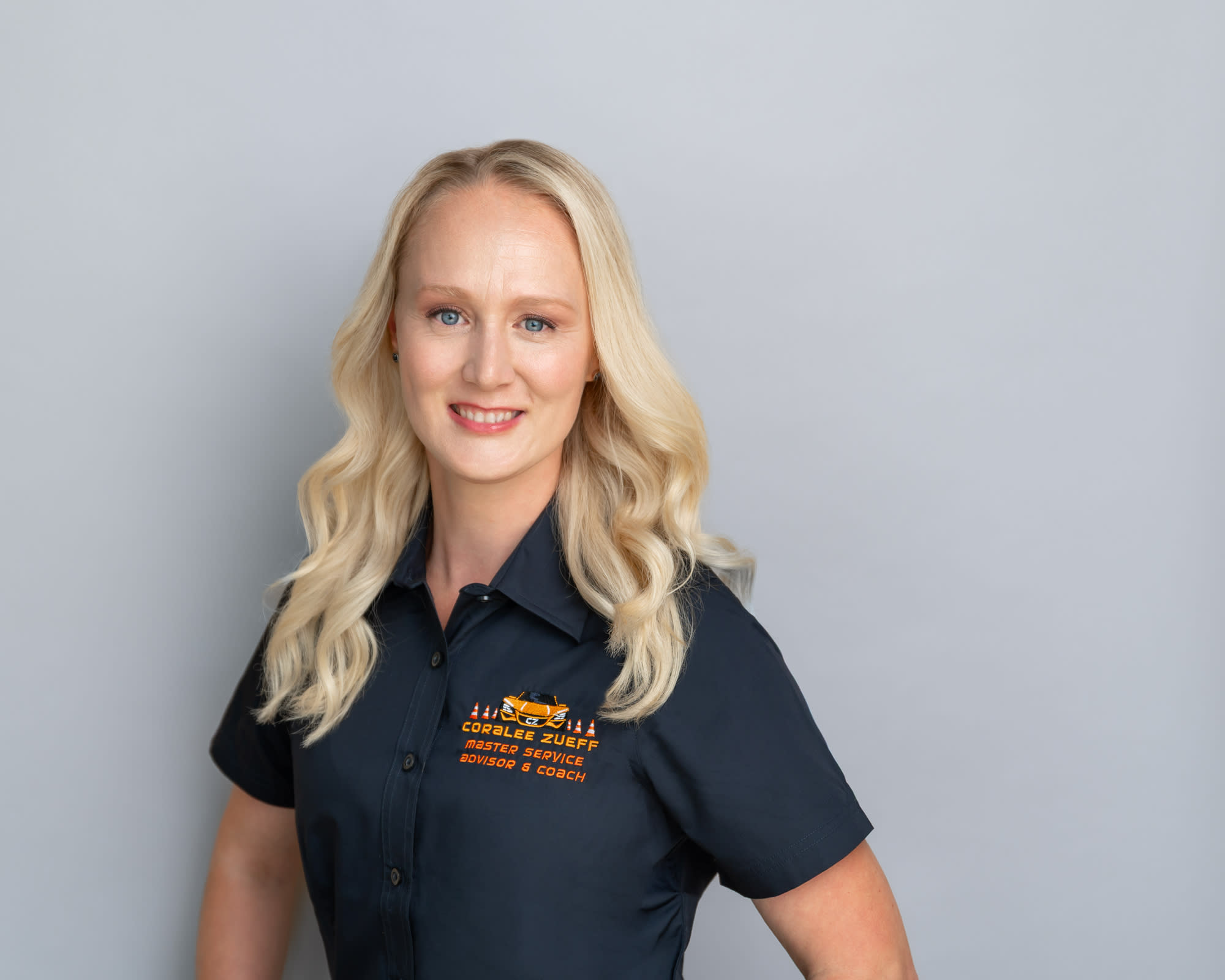
  • Coralee Zueff
Summary
There is a lot of talk around AI. Some shops want nothing to do with it and others think it will take our jobs. Coralee’s belief if AI is a tool like any other and today’s most successful shops know HOW to utilize it and understand its current limitations. In this interactive session, you’ll learn how AI is transforming the way service advisors and shops improve customer communication, technician efficiency and profitability. AI Features Discussed: ● Inspection Assistant: Helps service advisors capture customer concerns better to help technicians be as efficient as possible and diagnose the customer complaint quickly. ● Maintenance systems: Analyzes each vehicle’s service history (from the shop management system & external data when available) and compares it against recommended maintenance intervals (either manufacturer or custom) so shops don’t miss maintenance work. ● Customer Workflows: Automates or assists with parts of the customer interaction workflow (e.g., capturing concerns, follow-ups, reminders) to keep the process smoother. ● Profitability Analysis / Real-Time Repair Order Auditing: Flag jobs that are under-priced or may have low profitability before they are sold, and provide insights into technician productivity, bottlenecks, and operational inefficiencies. ● AI Clone (Digital Advisor/Owner Replica): ● A trained AI modeled after the shop owner or top advisor that can respond to customers in their voice and style for estimates, follow-ups, explanations, and training—ensuring consistency and scalability without burnout. ● AI Bot (Virtual Service Assistant): ● Handles routine customer interactions such as appointment scheduling, answering common questions, sending status updates, and triaging basic concerns—reducing front desk load and improving response time. ● Real-world case studies and testimonials from shop owners who’ve used AI to dramatically improve team performance—and their bottom line. ● Objection handling Examples of how real customers are using AI and how to answer them. As we all know, AI has its limitations. Coralee has identified AI is not always correct when it comes to technical data as well as come up with creative examples to explain these jobs to customers. Customers/clients are using AI to diagnose their vehicle and analyze estimates provided. We will also discuss how to handle these objections. Whether you’re trying to close more sales, build customer trust, or ensure consistency across, this class will show you how to turn every opportunity for growth.

(technical) Mastering Variable Valve Timing with Josh Weaver

Saturday PM Session

Speakers
  • Josh Weaver - Dorman
Summary
Essential Techniques for Automotive Technicians In the past, variable valve timing (VVT) was an uncommon technology, but it can be found on one or more camshafts in many of today’s vehicles. A thorough understanding of VVT is required for the modern technician, and this class provides the foundations and skills necessary to confidently work on VVT systems on a variety of popular engines. Save time and open new repair opportunities with this comprehensive course. What you will learn: • Understand the principles and mechanics of VVT systems, plus their impact on engine performance • Learn various mechanical testing techniques to ensure accurate diagnostics • Gain insights into crankshaft position (CKP) and camshaft position (CMP) sensors and their relevant codes • Use scan tools, meters and digital storage oscilloscopes (DSO) for precise testing and diagnostics • Analyze real-world case studies that apply to practical scenarios

(technical) HVAC Diagnostic Principles with Tony Martin

Saturday PM Session

Speakers
  • Tony Martin - Delphi
    Tony Martin has been working in the automotive and diesel technology fields since 1984. He started his career in Canada as an apprentice mechanic at an International Harvester dealer and graduated as an Interprovincial Journeyman Heavy Duty Equipment Mechanic in 1989. Since that time, he has operated his own mobile repair business, worked in Alaska’s Cook Inlet oilfield as a gas turbine technician, and taught automotive and diesel technology at the post-secondary level for 17 years. After leaving the University of Alaska in 2013, he worked as a mobile equipment maintenance trainer at a corporate gold mine in Fairbanks, Alaska. His last full-time day in the mining industry was August 1, 2022, and he now is a freelance writer and trainer. Tony has written dozens of articles over the years for Motor Age magazine and the Mobile Air Climate Systems Association (MACS). He has also presented seminars at many conferences, including NACAT, MACS, TST, Automechanika and the ASE Instructor Training conference. Tony holds 22 ASE certifications, including CMAT (A1-A9), CMTT (T1-T8), F1, H1, L1, L2 and L3.
Summary
Effective HVAC diagnostics require a thorough understanding of the physics that make the refrigeration circuit work. In this class, Tony Martin will explain concepts such as latent heat, sensible heat, superheat and subcooling and how these help us diagnose HVAC concerns. Don’t miss this opportunity to gain new skills or refresh your understanding of concepts you learned years ago. The learner will: -describe the operation of various HVAC components -explain latent heat of vaporization, latent heat of condensation and sensible heat -demonstrate practical uses of a refrigerant P/T chart -explain superheat and how it relates to TXV/evaporator operation -explain subcooling and how it relates to condenser operation -demonstrate HVAC diagnostics using these concepts

(technical) Get Amped – Using Electrical Current to Make Diagnostic Calls with Trevor Schlientz

Saturday PM Session

Speakers
  • Trevor Schlientz - Autonerdz
    Trevor Schlientz is the owner of Autonerdz, a company specializing in PicoScope sales, technical support, and diagnostic training for automotive professionals across North America. An ASE Master Certified Technician since 2005, Trevor spent more than 15 years working in the automotive repair industry before purchasing Autonerdz in 2020. Known for his practical, technician-focused approach, Trevor teaches diagnostic methods that technicians can immediately apply in the shop. His classes emphasize waveform analysis, test strategy, and understanding why a test works—not simply following a procedure. Rather than focusing on tool operation alone, he helps technicians develop the critical thinking skills needed to solve complex electrical and drivability problems with confidence. In addition to presenting at industry conferences and private training events, Trevor provides ongoing technical support and educational resources through Autonerdz. His mission is to help technicians become more capable diagnosticians by making advanced testing methods approachable, repeatable, and practical for everyday use.
Summary
Voltage gets most of the attention in automotive diagnostics, but amperage often tells the more interesting story. Measuring current flow allows technicians to evaluate both the electrical and mechanical health of a circuit, providing valuable diagnostic information that can't be seen with voltage measurements alone. In this class, we'll explore practical ways to use current as a diagnostic tool across a variety of automotive systems. Through real-world PicoScope captures and case studies, you'll learn how current flow can expose worn mechanical components, electrical faults, excessive resistance, and abnormal loading long before parts are removed or replaced. Topics include current ramp analysis, starter motors, fuel pumps, ignition coils, solenoids, electric motors, and other common automotive loads. More importantly, you'll learn why these waveforms look the way they do, allowing you to apply the same diagnostic principles to components you've never tested before. Whether you're new to using current probes or looking to get more from the one already in your toolbox, this session will help you turn amperage into one of your most valuable diagnostic measurements.

(technical) Parasitic Draw Diagnostics Tools, Techniques and Tips with Gary Machiros

Saturday PM Session

Speakers
  • Gary Machiros - WTI
Summary
- Vehicle Sleep Strategy Verification & Proper Test Setup - Key-Off Current Measurement Using DMM & Low-Amp Clamp Techniques - Lab Scope Current Ramp Analysis for Module & Circuit Activity - Thermal Imaging Application for High-Resistance & Active Component Identification - Systematic Circuit Isolation Through Fuse & Module Control Strategy Evaluation - Repair Verification Through Stabilized Current Draw Confirmation

(technical) Turbocharged Diagnostics with VE & Scan Data with Scott Shotton

Saturday PM Session

Speakers
  • Scott Shotton - WTI
Summary
Turbocharged engine diagnostic analysis using volumetric efficiency, load calculation, fuel trim behavior, and scan data relationships. • Naturally Aspirated vs. Turbocharged VE Behavior • MAF-Based Fuel Trim and Load PID Interpretation • Predicted vs. Actual Volumetric Efficiency Analysis • Scan Data Math for Airflow and Load Evaluation • Fuel Trim Relationships in Boosted Applications • Good vs. Faulted Vehicle Case Study Comparison

(management) A Vehicle's Medical Record: The Power of the DVI with Uwe Kleinschmidt

Saturday PM Session

Speakers
  • Uwe Kleinschmidt - AutoTechIQ
    Uwe Kleinschmidt is the Founder and CEO of AutoTechIQ, a company that helps auto repair shops improve their digital vehicle inspection (DVI) process with innovative software. A recognized innovator in the automotive aftermarket, Uwe was also the founder of AutoVitals, one of the original and disruptive DVI platforms in the industry. With deep expertise in both software development and shop operations technology, Uwe has spent his career advancing how repair shops communicate with customers and manage workflow through intelligent automation. At AutoTechIQ, he continues that mission by leading the creation of AI-powered tools that make inspection results clearer and more compelling for customers—helping service advisors focus on advising, not hard selling.
Summary
Transform your digital vehicle inspection process into a clear, transparent 'vehicle medical record' that customers feel good about. In this session, you'll learn how to: Remove sales pressure Increase customer approval rates Build trust through transparency Eliminate buyer's remorse Create customers who gladly return Stop selling repairs and start helping customers choose with confidence Discover how a well-designed digital vehicle inspection can educate customers, build long-term trust, and improve both the customer experience and your shop's performance.

(management) Build the Business, Keep the Marriage: Working With Your Spouse or Partner with Rick White

Saturday PM Session

Speakers
  • Rick White - 180Biz
Summary
There are roughly five million family-owned businesses in this country. They generate more than half the GDP and employ nearly two-thirds of the workforce — and depending on which study you read, somewhere between 47 and 70 percent of them fail. Most of them don’t fail for lack of work ethic. They fail because two people who love each other never sat down and agreed on what they were building, who does what, who decides what, and what happens when they disagree. You probably know the two starting points. Sometimes it’s two star-crossed dreamers, heads in the sky, talking about how good it’s going to be. Sometimes one person watches their spouse drowning in a business, steps in to help because they love them, and ends up spending their life inside somebody else’s dream. Both roads lead to the same place: confusion, friction, frustration, and fighting — at work and then at home, because the two stopped being separate a long time ago. It doesn’t have to go that way. Working with your spouse or partner can be the best thing you ever do — you magnify the joys, halve the pain, build something together, and never carry the weight alone. But that only happens on top of groundwork most couples never lay. This half-day session is that groundwork, done in the room. You’ll define and agree on goals, standards, strengths, lanes, and boundaries — who does what, and who has authority to decide what without checking first. You’ll settle compensation, because letting a spouse work for nothing is degrading and it poisons everything downstream. You’ll build your accountability rhythm: what gets measured, when it gets measured, and when it gets discussed. And you’ll work through the what-ifs while things are calm — how you decide when you can’t agree, when you revisit a decision, and what happens if one of you wants out. Then you’ll work on the part that keeps the business from eating the marriage: seeing and hearing each other, giving room for emotions without taking them personally, staying curious instead of reacting, and going for understanding rather than being right. You’ll practice a simple check-in you can run every week for the rest of your working life. Business partners: the material is nearly identical. Swap camaraderie for intimacy, and add the harder agreement questions — what happens if one of you dies, wants out, stops carrying the weight, or takes something that isn’t theirs. Bring your spouse or partner if you can. This class works best done together. WHAT YOU WILL LEARN • Recognize the two ways couples end up in business together, and the predictable trouble each one creates • Define and agree on goals, standards, strengths, lanes, and boundaries — in writing • Settle compensation, and understand why an unpaid spouse damages the business relationship • Build an accountability rhythm: what’s measured, when, and when it’s discussed • Work through the what-ifs before you need them — disagreement, deadlock, revisiting, and exit • Establish and protect connection through being seen, heard, appreciated, and respected • Give each other room for emotion without reacting or keeping score • Run a weekly check-in on the business, the workload, and the relationship • Compartmentalize work and home so the business doesn’t become the only thing you talk about • Understand what changes when the partner is a business partner rather than a spouse
Powered By GrowthZone

News:

Right to Repair Act – 2026 Updates

Proposed RuleMaking: Vehicle Equipment & Inspection

AASP-PA and MAACA Unite!

Modernization of the Vehicle Inspection Process in Pennsylvania

Proposed State Implementation Plan Revision on Basic Vehicle Inspection & Maintenance Program Certification


For Automotive Service
Professionals

JOIN MAACA TODAY

©2026 All Rights Reserved | Privacy Policy

Made In U.S.A.

Autoshop Solutions, Inc Logo